The Importance of Proper Refrigerant Recovery
Responsible recycling does not begin only when equipment is dismantled. In many cases, it begins much earlier, with the proper identification, handling, and recovery of substances that may carry environmental risk if not managed correctly.
For REDUX, responsible end-of-life equipment management is not only about recovering valuable materials. It is also about managing environmental risks safely, strengthening process control, and ensuring that each stage of the recovery journey is carried out with accountability.
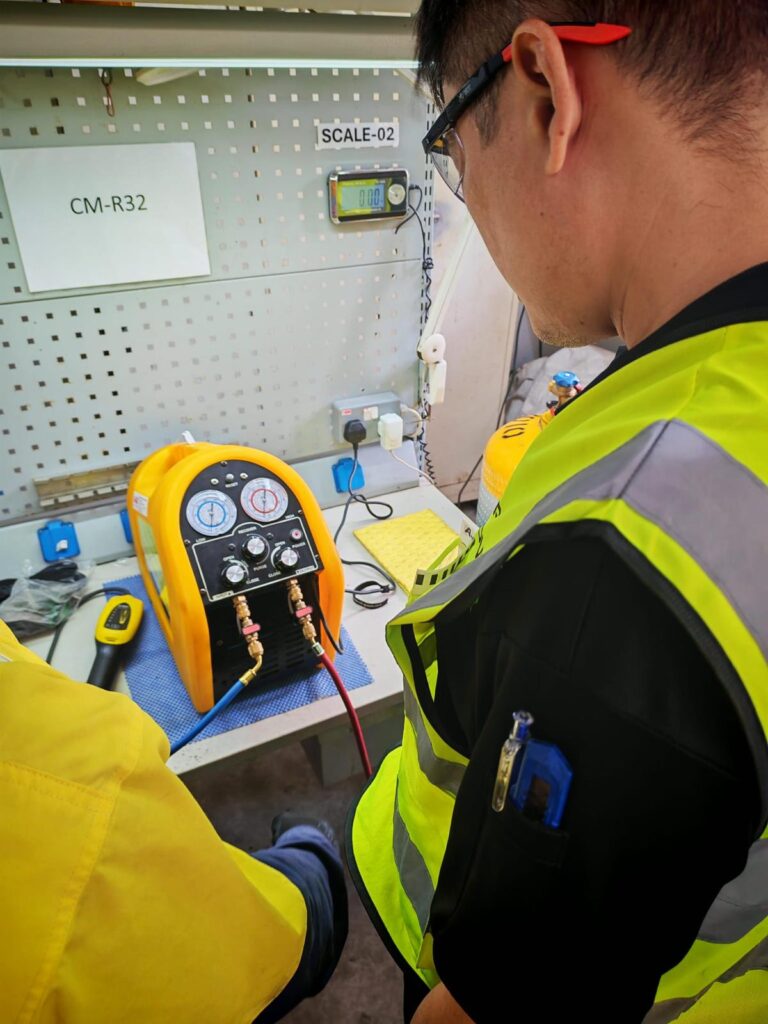
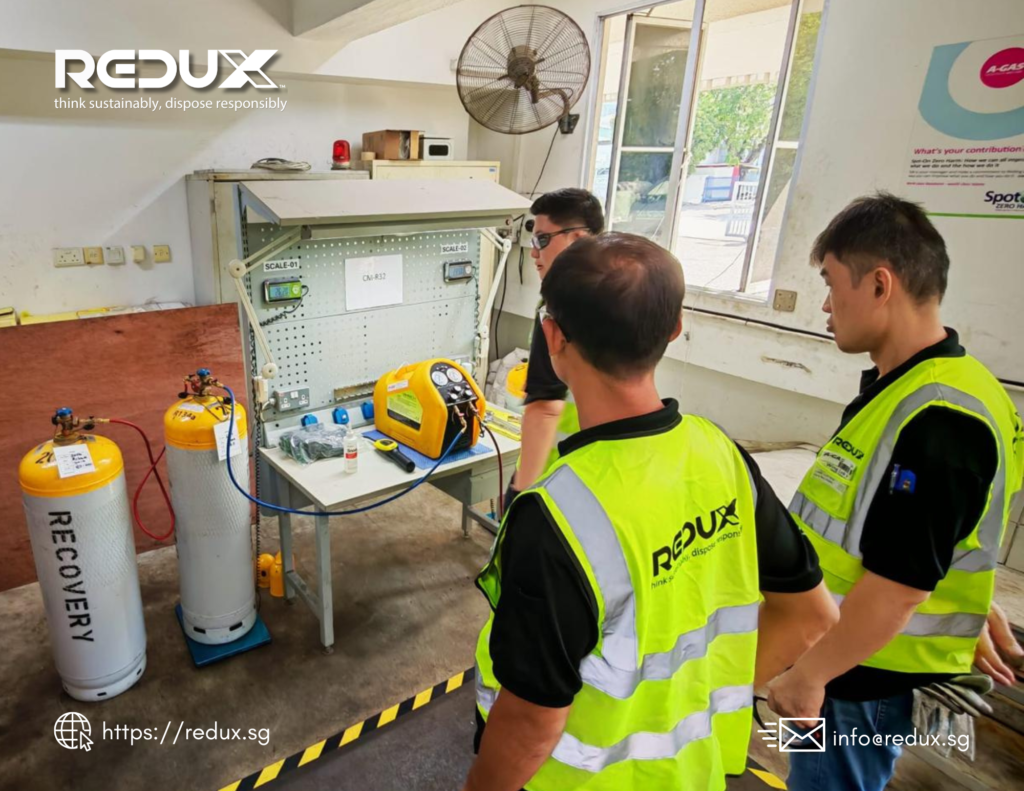
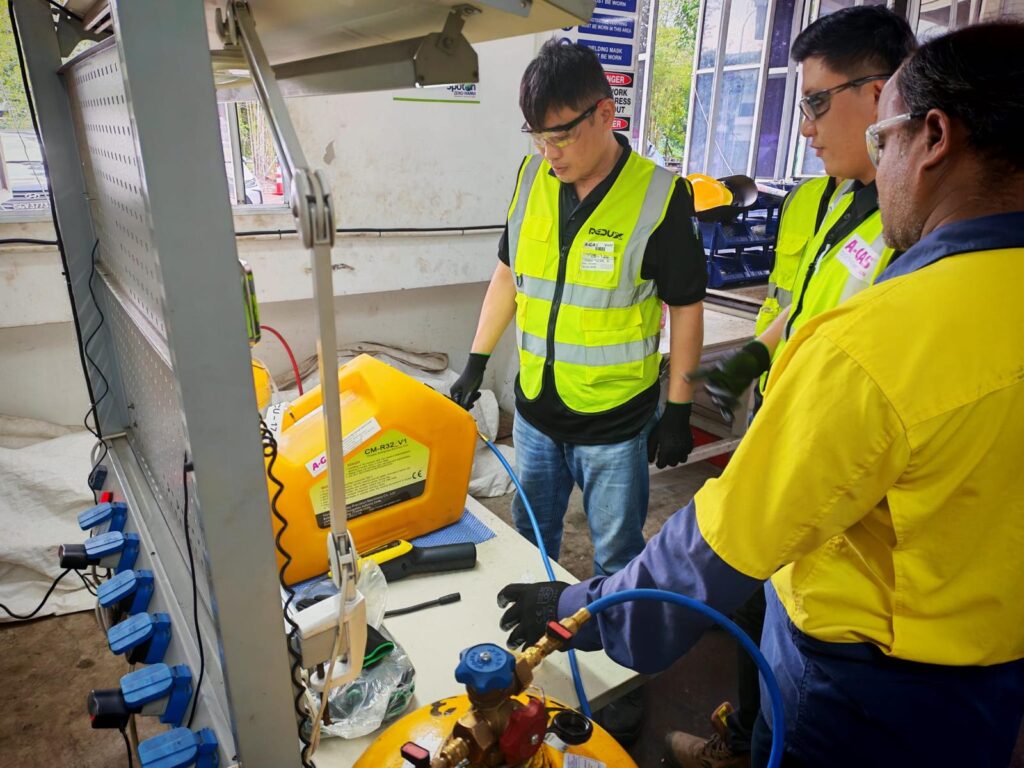
As part of this commitment, members of the REDUX team recently attended a refrigerant recovery training with A-Gas Singapore, gaining practical exposure to safe gas extraction and responsible refrigerant handling.
The training provided hands-on learning on how refrigerants should be recovered from cooling equipment such as air-conditioning systems, chillers, refrigeration units, and other cooling-related assets. While these gases are often not visible during the disposal process, they can have a significant environmental impact if released directly into the atmosphere.
Why Refrigerant Recovery Matters
Refrigerants play an essential role in cooling systems. However, when cooling equipment reaches the end of its useful life, these gases must be properly extracted before dismantling, recycling, or disposal takes place.
If refrigerants are not recovered correctly, they may escape into the atmosphere during handling, transportation, dismantling, or disposal. This can contribute to greenhouse gas emissions and create unnecessary environmental impact.
Proper refrigerant recovery ensures that these gases are safely contained instead of being released. Once recovered, they can be managed through appropriate channels, including treatment, reclamation, repurposing, or responsible disposal where applicable.
This makes refrigerant recovery an important part of responsible end-of-life equipment management. It helps transform a potential environmental risk into a controlled and accountable process.
Consequences of Improper Refrigerant Handling

Hidden Atmospheric Release
Refrigerant gases may escapes unnoticed during handling or dismantling, contributing to greenhouse gas emissions before recycling even begins.

Worker Safety Risks
Cooling equipment may contain pressurised systems, residual gases, oils, and other components that require proper handling to reduce operational and safety risks.

Reduced Environmental Value
If refrigerants are released during handling, the environmental benefit of material recovery is reduced. Responsible recycling must address both recovery and emissions prevention.
Compliance and Reputational Risks
Customers, regulators, and stakeholders increasingly except environmental risks to be controlled at every stage of end of life (EOL) equipment management.
Proper refrigerant recovery supports safer, more accountable, and more environmentally responsible recycling.
Benefits of Proper Refrigerant Recovery
Proper refrigerant extraction brings important benefits to the recycling value chain.
It helps prevent the uncontrolled release of gases into the atmosphere and reduces unnecessary environmental impact. It also supports safer handling of end-of-life cooling equipment before dismantling or material recovery begins.
Recovered refrigerants can be managed through appropriate downstream processes. Where suitable, they may be reclaimed or repurposed, supporting a more circular approach to resource management instead of treating all recovered substances as waste.
Proper recovery also strengthens traceability and accountability. When gases are extracted, contained, and managed correctly, the recycling process becomes more complete and reliable. This is especially important for customers who require responsible disposal, audit-ready documentation, and greater confidence in how their assets are handled.
For businesses, end-of-life equipment management can therefore go beyond simple disposal. It can become part of a broader sustainability strategy that supports emissions reduction, safer operations, and responsible resource recovery.
Supporting Safer and More Responsible Recycling
Through this workshop, the REDUX team gained valuable practical exposure to refrigerant recovery methods, safe handling practices, and the importance of managing gases before equipment is dismantled.
Safe recovery practices help prevent the uncontrolled release of refrigerant gases into the atmosphere, support safer handling of end-of-life cooling equipment, reduce environmental risks before dismantling begins, and improve compliance with responsible recycling and environmental practices.
They also allow recovered gases to be properly managed, reclaimed, or repurposed where applicable. This strengthens circular economy outcomes by reducing unnecessary waste and emissions while improving customer confidence in responsible disposal and asset recovery processes.
A-Gas has highlighted the importance of building refrigerant recovery expertise and equipping industry professionals with updated knowledge in best-practice handling methods, safety techniques, and environmental regulations. This aligns closely with the growing need for stronger capability building across the recycling, facilities management, and HVAC-R sectors.
For REDUX , this learning is part of our continuous effort to strengthen how we manage different types of end-of-life equipment. Every asset type comes with its own risks, materials, and handling requirements. Refrigerant-containing equipment is one example where proper process knowledge is critical.
What This Means for REDUX
At REDUX, responsible recycling goes beyond dismantling equipment and recovering materials. It also means understanding the environmental risks behind each asset type and ensuring that every stage is handled with the right knowledge, controls, and accountability.
This training enhances our team’s technical awareness of refrigerant-containing equipment and reinforces the importance of safe extraction before recycling. It also supports our internal capability to identify potential risks earlier in the handling process, allowing us to manage equipment more responsibly from the point of receipt to downstream processing.
It also reflects REDUX’s commitment to continuous learning. As the recycling industry evolves, the expectations placed on responsible recyclers are also changing. Customers increasingly expect more than basic disposal. They want proper handling, traceability, environmental accountability, and confidence that risks are being managed professionally.
By building knowledge in refrigerant recovery, REDUX is better positioned to support customers who need responsible end-of-life management for equipment that may contain refrigerants, including air-conditioning systems, chillers, refrigeration units, and other cooling-related assets.
This complements REDUX’s broader approach to sustainability. Our work in IT asset disposal (ITAD), e-waste recycling, secure data destruction, data centre decommissioning, solar panel recycling, and carbon reporting – Carbon Impact Report (CIR) is guided by one common principle: end-of-life management must be handled responsibly, safely, and with measurable environmental consideration.
Refrigerant recovery adds another important layer to this approach.
Moving Beyond Material Recovery
Responsible recycling is often associated with recovering materials such as metals, plastics, glass, circuit boards, and other reusable resources. While material recovery remains important, it is only one part of the process.
Some equipment also contains substances that must be safely managed before materials can be recovered. Refrigerants are one such example.
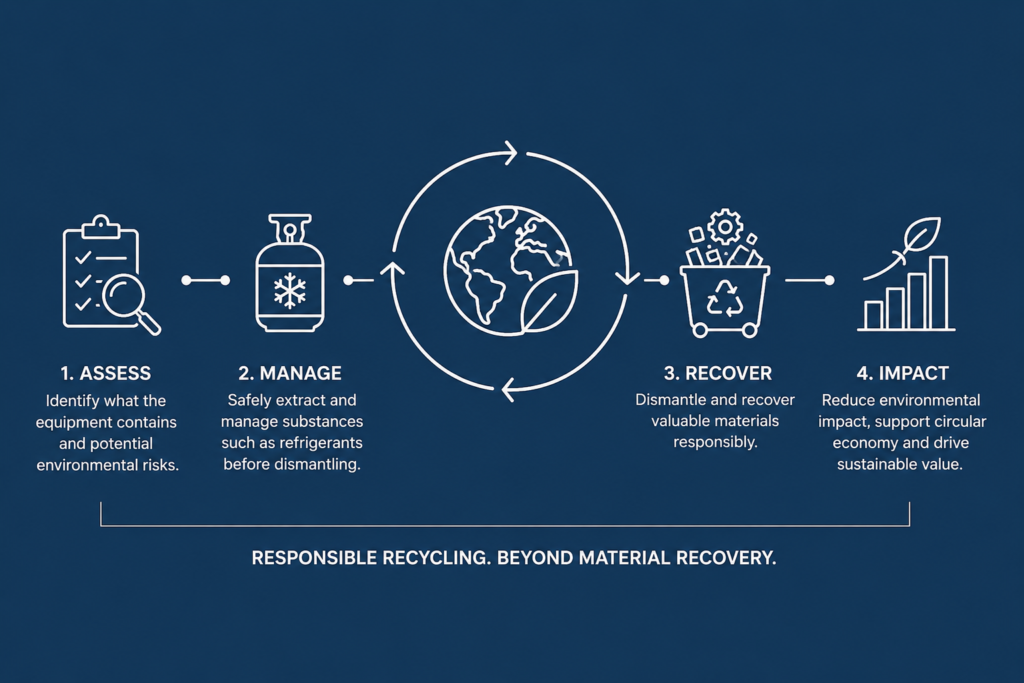
This means responsible recycling must consider the full lifecycle of an asset. Before dismantling begins, recyclers must understand what the equipment contains, what risks may be present, and what steps are required to manage those risks correctly.
For REDUX, this reflects how the recycling industry should continue to progress. Responsible recycling should move beyond simple waste handling towards a more complete model that includes environmental risk management, resource recovery, emissions prevention, and circular economy support.
Building a More Accountable Recycling Ecosystem
As sustainability standards continue to rise, organisations need recycling partners who can provide more than collection and disposal. They need partners who understand compliance, safety, traceability, and environmental impact.
Proper refrigerant recovery supports this shift.
It helps businesses reduce the risk of harmful gas release, supports safer working conditions, improves the quality of downstream recycling, and strengthens environmental accountability. Most importantly, it ensures that end-of-life cooling equipment is not treated as ordinary waste, but as equipment that requires proper knowledge and controlled handling.
At REDUX, we believe that every stage matters, from collection and sorting to dismantling, recovery, reporting, and responsible downstream management.
Our Commitment
We would like to thank A-Gas Singapore for the valuable sharing and hands-on learning experience.
The session was a meaningful opportunity for our team to deepen our understanding of refrigerant recovery and its role in responsible equipment recycling.
As REDUX continues to strengthen our capabilities, we remain committed to supporting safer, more traceable, and more environmentally responsible recycling practices for our customers and partners.
Responsible recycling is not only about what we recover. It is also about what we prevent from being released, wasted, or mismanaged.
♻️ think sustainably, dispose responsibly.